Jeff Kent is heading to Cooperstown. After falling short during 10 years on the writers’ ballot, the power-hitting second baseman received a stunning election to the Baseball Hall of Fame on December 7, 2025, via the Contemporary Baseball Era Committee. Kent received 14 of 16 votes from the committee, comfortably surpassing the 12 votes needed for induction. CBSSports.com
The announcement marks a remarkable turnaround for Kent, whose candidacy never gained significant traction with Baseball Writers’ Association of America voters. During his decade on the BBWAA ballot, Kent never received more than 46.5% of the vote, CBSSports.com falling well short of the 75% threshold required for election. His selection represents validation for a player whose offensive production at second base remains unmatched in baseball history.
A Historic Power Profile
Kent’s Hall of Fame case rests on an undeniable foundation: no second baseman in baseball history hit more home runs. Of his 377 career home runs, 351 came while playing second base, Baseball Hall of Fame a record that stands far above the competition. To put this achievement in perspective, Robinson Cano ranks second all-time with 316 home runs while starting at second base, leaving Kent’s mark 35 homers clear of the nearest challenger.
The California native’s power production extended beyond simply hitting home runs. Kent batted .290 with a .356 on-base percentage and .500 slugging percentage over his 17-year career, compiling 2,461 hits, 560 doubles, 1,518 RBI, and 1,320 runs scored. CBSSports.com His consistency at the plate manifested in eight seasons with at least 20 home runs and 100 RBI, a feat accomplished just five times by legendary second baseman Rogers Hornsby and never matched by any other player at the position for more than four campaigns.
Kent’s offensive dominance earned him four Silver Slugger Awards, recognizing him as the National League’s best-hitting second baseman. He made five All-Star teams during his career, starting four of those games and joining an elite group of second basemen to start multiple All-Star contests for different franchises.
The 2000 MVP Season
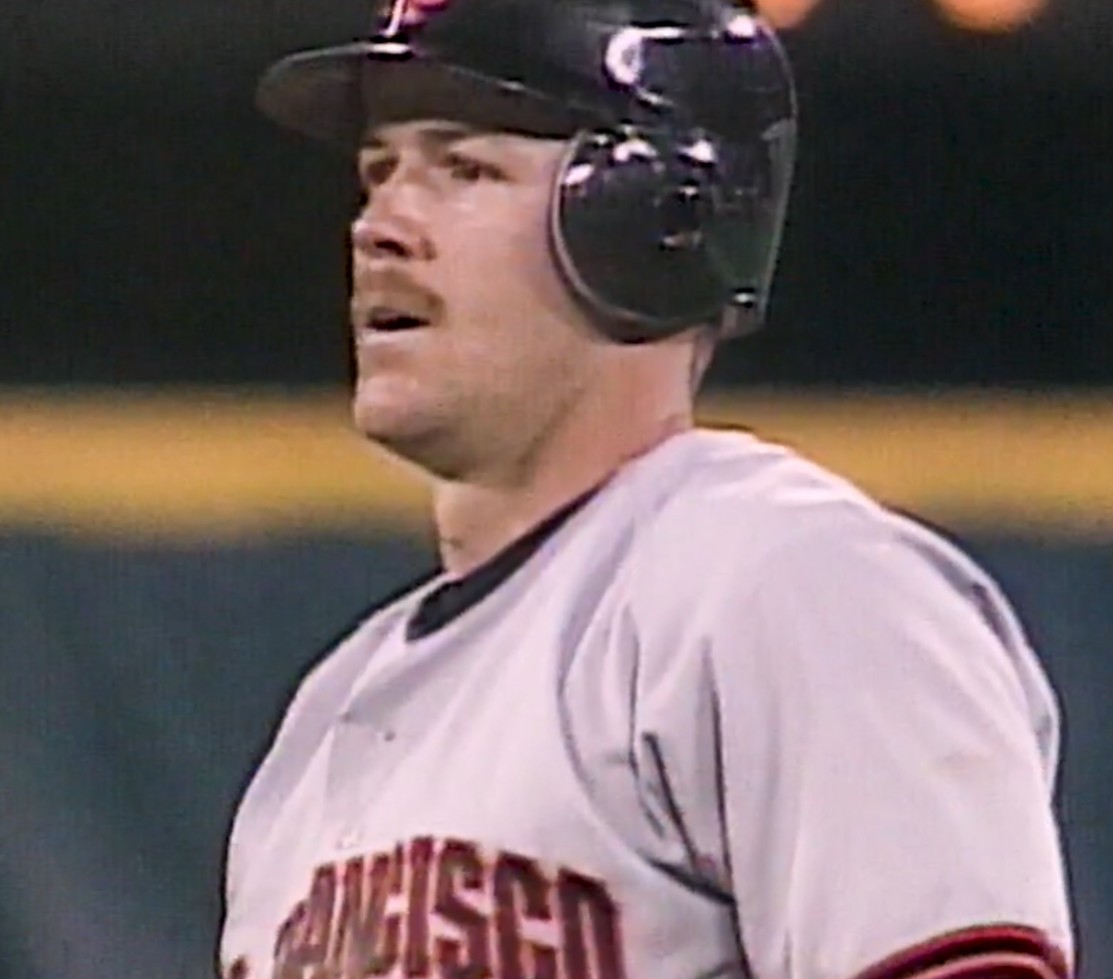
Kent’s crowning individual achievement came in 2000, when he captured the National League Most Valuable Player Award as a member of the San Francisco Giants. He hit .334 with 33 home runs, 125 RBI and 114 runs scored Baseball Hall of Fame during the Giants’ first season at their new waterfront ballpark in China Basin. The MVP honor came in a year when Kent edged out his teammate Barry Bonds for the award, a decision that would take on additional significance given the divergent Hall of Fame paths the two players would follow.
That 2000 season represented the peak of Kent’s six-year tenure in San Francisco, where he established himself as one of baseball’s premier offensive threats. Kent averaged 29 home runs and 115 RBI while hitting .297 over his time with the Giants, forming a formidable one-two punch alongside Bonds that helped San Francisco reach the 2002 World Series.
A Career Journey Across Six Teams
Kent’s path to Cooperstown featured stops with six different organizations, beginning with the Toronto Blue Jays in 1992. After making his debut that April and recording a hit in his first career at-bat, Kent earned a World Series ring when the Blue Jays captured the championship later that year, despite being traded to the New York Mets before the playoffs.
The journey continued through Cleveland, though Kent’s time with the Indians lasted just the final months of the 1996 season. The following offseason brought the trade that would define his career. Cleveland sent Kent to San Francisco in a deal that brought popular Giants third baseman Matt Williams to the Indians. The trade initially drew criticism from Giants fans unhappy to see Williams depart, but Kent’s performance quickly validated general manager Brian Sabean’s decision.
After his six years in San Francisco ended following the 2002 season, Kent signed with the Houston Astros. In Game 5 of the 2004 National League Championship Series, Kent hit a three-run walk-off home run in the bottom of the ninth to break a scoreless tie Wikipedia and give Houston a 3-2 series lead over St. Louis, though the Cardinals would ultimately prevail in seven games.
Kent finished his career with four seasons for the Los Angeles Dodgers, his hometown team. He maintained his productivity through his late 30s despite battling injuries, averaging 114 OPS+ during his final three seasons and continuing to provide leadership for a franchise he had rooted for as a youth in Bellflower, California.
The Defensive and Clubhouse Controversies
While Kent’s offensive credentials warranted serious Hall of Fame consideration, his candidacy faced obstacles beyond simple ballot crowding. His defensive metrics and baserunning numbers dragged down advanced statistics like Wins Above Replacement, with Kent finishing his career at 55.4 WAR. Among Hall of Fame second basemen, this total ranks near the bottom, leading many writers to question whether Kent’s one-dimensional profile merited enshrinement.
Kent’s reputation in the clubhouse also complicated his legacy. His time with the Mets earned him a reputation for having a quick temper and maintaining distance from teammates. He famously refused to participate in his hazing ritual with the Mets, feeling he had already completed his rookie initiation in Toronto. The clubhouse tensions followed Kent to San Francisco, where his relationship with Bonds became strained.
The most visible manifestation of this tension occurred during the 2002 season when Kent and Bonds engaged in a dugout argument that became a media sensation. When asked about Bonds following his Hall of Fame election, Kent acknowledged their complicated dynamic while praising his former teammate’s abilities. “We knocked heads a little bit. He was a guy that motivated me at times, in frustration and love,” 25 News Now Kent said, carefully avoiding taking a definitive stance on whether Bonds deserves Hall of Fame induction.
The Emotional Announcement
Kent struggled to contain his emotions following the announcement of his election. “Absolutely unprepared. Emotionally unstable. Thoughts are so far clouded,” 25 News Now he said shortly after receiving the news. The overwhelming nature of the honor brought tears as Kent reflected on his career and the unexpected path to Cooperstown.
Kent indicated that he hopes to be represented on his Hall of Fame plaque as a Giant, citing his most significant career achievements coming during his six seasons in San Francisco. With 31.6 WAR compiled during his time with the Giants, compared to no more than 8.4 WAR with any other team, the statistical case for a Giants cap appears strong, though the Hall of Fame will make the final determination.
The Other Candidates and New Rules
Kent was one of eight candidates on the Contemporary Baseball Era Committee ballot, joined by Barry Bonds, Roger Clemens, Carlos Delgado, Don Mattingly, Dale Murphy, Gary Sheffield, and Fernando Valenzuela. Carlos Delgado received nine votes, while Dale Murphy and Don Mattingly each received six votes. MLB Trade Rumors Bonds, Clemens, Sheffield, and Valenzuela each received fewer than five votes.
The vote carried additional significance due to a new Hall of Fame rule implemented in March 2025. Candidates who receive fewer than five votes are not eligible to appear on the next Contemporary Baseball Era Committee ballot in December 2028. CBSSports.com This means Bonds, Clemens, Sheffield, and Valenzuela cannot appear on the Contemporary Era ballot again until at least 2031. If any of them receive fewer than five votes in their next appearance, they will be permanently barred from future consideration on Contemporary Era ballots.
For Bonds and Clemens, both of whom faced allegations of performance-enhancing drug use throughout their careers, this new rule significantly narrows their path to Cooperstown. Bonds holds the all-time and single-season home run records and won seven MVP Awards, while Clemens compiled 354 wins and seven Cy Young Awards. Yet both players have repeatedly fallen short in Hall of Fame voting, with voters citing the Character Clause in their decisions to leave these statistically dominant players off their ballots.
Looking Ahead to Induction
Kent will be inducted into the National Baseball Hall of Fame on July 26, 2026, The Mercury News in Cooperstown, New York. He will be joined by any players elected through the Baseball Writers’ Association of America ballot, with those results set to be announced on January 20, 2026. Current candidates with strong chances include Carlos Beltran and Andruw Jones, both of whom have appeared on multiple ballots and steadily gained support.
The 16-member Contemporary Baseball Era Committee that elected Kent included seven Hall of Famers (Ferguson Jenkins, Jim Kaat, Juan Marichal, Tony Perez, Ozzie Smith, Alan Trammell, and Robin Yount), four former general managers (Doug Melvin, Kim Ng, Tony Reagins, and Terry Ryan), two current MLB owners (Mark Attanasio and Arte Moreno), two media members (Tyler Kepner and Jayson Stark), and historian Steve Hirdt.
Kent’s Hall of Fame Legacy
Kent’s election validates a career defined by offensive dominance at a premium defensive position. While debates about his defensive limitations and clubhouse demeanor may continue, his statistical achievements at second base stand unchallenged. He redefined what power production could look like from the keystone position during an era when second basemen were typically expected to contribute more through contact and defense than raw slugging.
His 1,518 RBI rank third all-time among second basemen, while his 560 doubles place him 30th on baseball’s all-time list regardless of position. These numbers, combined with his unmatched home run total at second base, create a compelling case for a player who consistently produced at an elite level throughout the prime of his career.
For baseball families and young players looking to understand what Hall of Fame production looks like, Kent’s career offers valuable lessons. His late-blooming success demonstrates that perseverance matters. After bouncing between teams and showing only average production for his first five major league seasons, Kent transformed himself into an elite player once he found stability with the Giants at age 29. He then maintained that elite level for more than a decade, proving that consistent excellence over an extended period can overcome a slower start to a career.
Kent becomes the 21st second baseman elected to the Hall of Fame and the 62nd player to earn induction who played for the Giants. His journey from a 20th-round draft pick out of UC Berkeley to Cooperstown demonstrates that conventional Hall of Fame paths don’t always apply. Sometimes the road takes unexpected turns, includes stops with multiple organizations, and requires patience from both the player and those who evaluate his legacy. In Kent’s case, that patience has finally been rewarded with baseball’s highest honor.